
MANUFACTURING GROWTH · FACILITY EXPANSION
Manufacturing Expansion Services
Grow with a plan.
Invest with clarity.
WorldPoint’s manufacturing expansion services connect strategy, feasibility, location analysis, and project coordination for U.S. growth. Compare expansion, relocation, and new-facility options before committing capital.
Test your assumptions, understand the trade-offs, and choose a direction built around long-term operating needs.
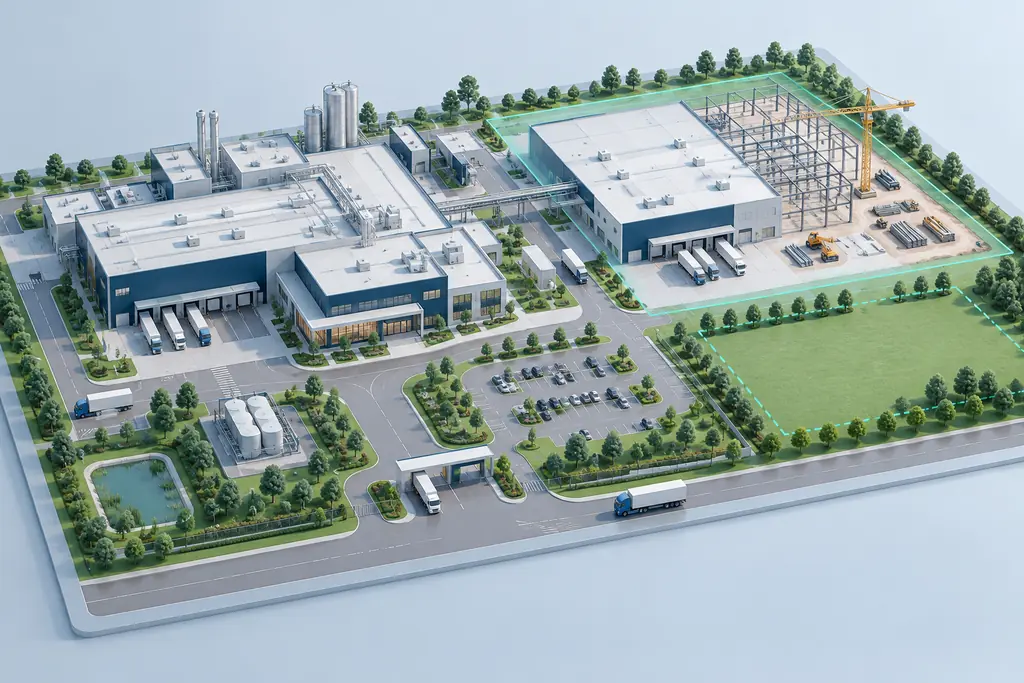
Conceptual expansion illustration
BEFORE THE SITE SEARCH
What are manufacturing expansion services?
Manufacturing expansion services combine strategic advisory, feasibility analysis, location strategy, site selection, and implementation planning. The work connects production requirements, workforce, utilities, logistics, capital investment, and recurring costs so the facility plan follows the business case.
WorldPoint helps domestic and international manufacturers compare expansion in place, a new facility, and a broader production network on consistent criteria. Operations, finance, HR, supply chain, and executive leadership can work from the same assumptions.
Start with the decision ahead.
Capacity pressure
Review production needs, existing constraints, and the next phase of growth.
Investment decision
Compare options before you allocate capital or commit to a location.
First U.S. operation
Understand the markets, infrastructure, and local relationships involved in establishing a facility.
EXPANSION SCENARIOS
One growth goal.
Several ways to get there.
One growth objective can lead to expansion, relocation, or added-facility options. We examine each scenario against your business model, existing assets, operating requirements, and long-term priorities.
Expand an existing facility
Can your current site support the next phase?
Space, utility headroom, workforce capacity, and potential disruption to ongoing production.
Develop a new facility
Would a new location unlock better capacity?
Market fit, labor availability, site readiness, logistics, and investment needs for a new manufacturing operation.
Coordinate multi-site growth
How will the facilities work as one network?
Regional roles, customer coverage, supplier access, freight flows, and capacity across planned locations.
Enter U.S. markets
What does a first U.S. operation require?
Market comparisons, workforce, utilities, permitting, and economic development coordination for international teams.
Evaluate reshoring & nearshoring
How could a new footprint support resilience?
Supplier proximity, freight implications, customer access, and operating conditions for relocation or expansion.
Expand distribution & logistics
Where could capacity improve service levels?
Facility network coverage, delivery requirements, transport access, and operating costs for logistics expansion.
WHAT WE EVALUATE
Compare the whole
business case.
A facility decision shapes more than production space. We compare each growth option against your business objectives, practical operating needs, and financial parameters, using a consistent framework.
Growth & market fit
Business objectives, capacity needs, customer access, and room for future growth establish what each option has to achieve.
Operations & people
Workforce skills and availability, supply chain impacts, logistics access, infrastructure, and utility capacity show what the operation can support.
Capital, costs & risk
Capital requirements, long-term operating costs, incentives, permitting, environmental exposure, and production disruption influence the financial and risk profile of each path.
THE ADVISORY PROCESS
From business discovery
to an expansion roadmap.
Five phases connect your expansion goals with a practical direction. We test the assumptions behind each scenario and explain how the recommendation is built.
Your engagement is shaped around the scope, the information available, and the decision your team needs to make.
01
业务探索
Clarify growth objectives, production capacity, market demand, financial goals, and operational priorities.
Outcome: A shared set of requirements.
02
Opportunity assessment
Compare regions and markets, outline growth scenarios, review infrastructure, and flag early constraints.
Outcome: Comparable expansion scenarios.
03
Strategic analysis
Evaluate workforce, supply chains, operating costs, utilities, business climate, and incentive opportunities together.
Outcome: Cost and operational trade-offs.
04
Recommendations
Bring financial and operational findings into an expansion strategy report, with a recommended direction and a practical roadmap.
Outcome: A supported strategy recommendation.
05
实施支持
As the strategy moves into site selection and implementation, support coordination with internal stakeholders and trusted local partners.
Outcome: Coordinated next steps.
CONNECT THE STRATEGY WITH THE INVESTMENT DECISION
Move the project forward with evidence.
Engage before major commitments, or bring an existing project for a defined review. The analysis should answer the decision in front of your team and carry those findings into the next phase.
Test whether the investment works.
Compare capacity forecasts, capital needs, operating costs, and the assumptions behind the business case. Use scenarios and sensitivity analysis to understand which changes could affect the recommendation.
Explore feasibility studiesCompare expand, lease, build, or acquire.
Evaluate production fit, retrofit or development needs, utilities, staffing, logistics, business interruption, and later growth. Compare the full path to operations alongside the property and project costs.
Explore cost analysisAssign the route to operational readiness.
Identify the executive sponsor, decision rights, approvals, and owners of utility, permitting, facility, hiring, and relocation milestones. Keep unresolved dependencies visible as the project moves toward launch.
了解项目协调For the people arriving with the project, connect facility planning with U.S. landing services. Read how clients describe WorldPoint’s work in our published client references.
WorldPoint provides advisory, analysis, planning, and coordination. Licensed real estate brokerage activities are handled separately through CBREG True Team; specialist technical, legal, construction, and provider services are coordinated with the relevant professionals.
WHAT CLIENTS RECEIVE
A clear strategy.
A practical path forward.
Typical deliverables organize the analysis into materials your leadership team can use to align around a direction. The final package reflects your project scope.
Expansion strategy report
A documented direction that connects business and financial objectives with the facility plan.
Comparative market analysis
Consistent regional and market comparisons based on the operating conditions your business requires.
Growth scenario evaluation
Review the opportunities and constraints of expanding in place, building new, or coordinating multiple facilities.
Operating costs & risk
Understand long-term operating costs alongside utility, permitting, workforce, and other risk factors.
Executive recommendations
Strategic recommendations and executive presentation materials that explain findings and trade-offs in plain language.
Expansion roadmap
Connect the chosen direction with the next decisions, workstreams, and coordination needed to move forward.
MANUFACTURING-FOCUSED EXPERIENCE
Experience across
capital-intensive industries.
WorldPoint supports manufacturing and industrial expansion across businesses whose growth depends on reliable utilities, access to the right workforce, and efficient logistics.
Manufacturing
Advanced manufacturing
Industrial manufacturing
Consumer products
Mobility & energy
Automotive
Electric vehicles
Battery manufacturing
Specialized operations
Aerospace
Food and beverage processing
Distribution and logistics
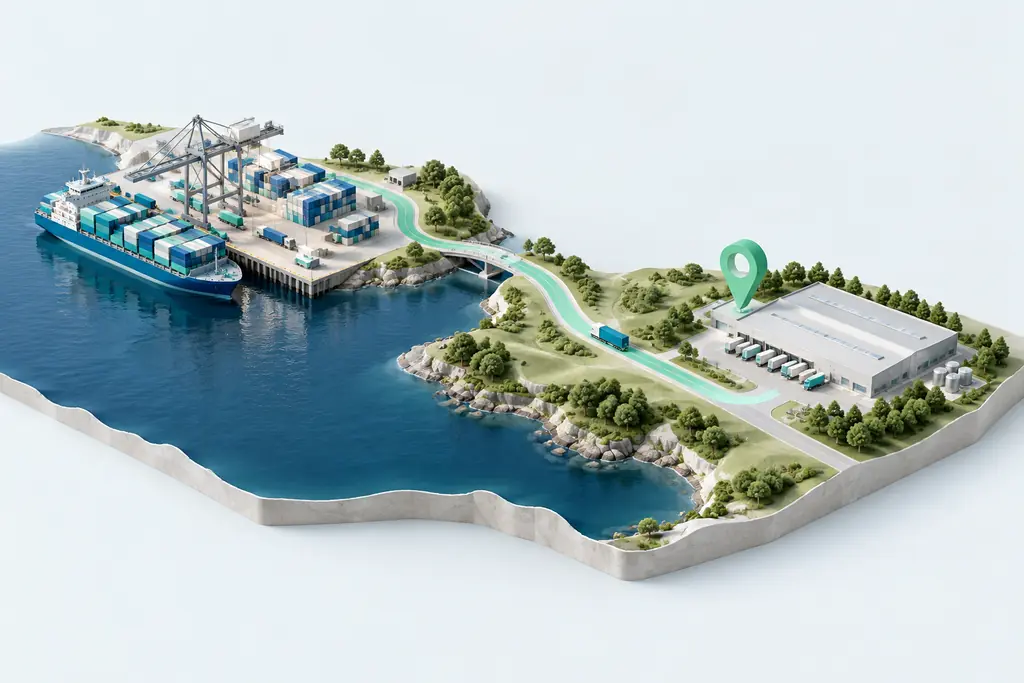
U.S. GROWTH. GLOBAL PERSPECTIVE.
A clearer route
into U.S. operations.
We support domestic and international manufacturers evaluating U.S. expansion, including companies from Asia establishing or growing their American operations.
For international teams, the work can include regional labor markets, utility processes, permitting pathways, and economic development relationships. WorldPoint’s U.S. landing services can also help coordinate housing, transport, employee arrivals, and local introductions alongside the facility plan.
START WITH A CLEARER BRIEF
Prepare for your
expansion conversation.
Bring your growth goals, capacity forecasts, current facility constraints, workforce and utility needs, target timing, and investment parameters. Early estimates help frame the questions and identify where more analysis is needed.
Useful planning resources
ANSWERS BEFORE YOU COMMIT
Manufacturing expansion services: common questions
What is expansion advisory?
Expansion advisory provides strategic guidance for evaluating business growth options before committing to a facility project. It connects operating requirements, market comparisons, financial considerations, and risk with an informed expansion direction.
When should we engage an expansion advisor?
Early involvement is most useful before selecting a site or making major capital commitments. It gives your team room to compare alternatives, test assumptions, and identify constraints while the direction can still be adjusted.
Can WorldPoint help international manufacturers expand into the United States?
Yes. WorldPoint supports domestic and international manufacturers evaluating U.S. growth, including market selection, location strategy, and site selection. For international teams, that can also involve utility processes, permitting, and economic development relationships.
Can you help us compare expanding in place with building a new facility?
Yes. WorldPoint evaluates growth scenarios against your operational requirements, costs, workforce, site readiness, and long-term objectives. The analysis helps leadership understand the opportunities and constraints of each path.
How does manufacturing expansion differ from site selection?
Site selection is one workstream within an expansion. The wider decision includes feasibility, capacity, investment, workforce, utilities, logistics, incentives, project governance, relocation, and launch dependencies. WorldPoint connects these decisions and defines the scope around your project.
How long does an expansion advisory engagement take?
Timing depends on the scope, the number of scenarios and markets considered, available information, infrastructure questions, and your internal decision process. The phases and decision points are shaped around the work your project requires.
What should we prepare for the first conversation?
Start with business goals, capacity needs, constraints at existing facilities, workforce and utility requirements, target timing, and investment parameters. Initial estimates help identify the key questions and the information needed for a more detailed comparison.
How much do manufacturing expansion advisory services cost?
Fees depend on the scope, number of scenarios and locations, data and technical review needs, and level of coordination. The first conversation establishes the decision, deliverables, responsibilities, and proposed engagement. Advisory fees are separate from land, construction, equipment, utilities, relocation, and other project costs.
YOUR NEXT EXPANSION DECISION
Give your next expansion
a stronger foundation.
Planning more capacity, a new manufacturing facility, or U.S. market entry? Talk with WorldPoint about your growth goals and what a structured expansion evaluation could look like for your business.