
DATA CENTER LOCATION STRATEGY • INFRASTRUCTURE & DELIVERY
Data Center Site Selection: What Companies Should Evaluate
Evaluate whether power, cooling, connectivity and site conditions can support the facility you need—on the schedule your business requires.
A clear operating brief and documented infrastructure evidence give leadership a stronger basis for comparing locations than land price or acreage alone.
By Hunter Drinkall · August 12, 2026
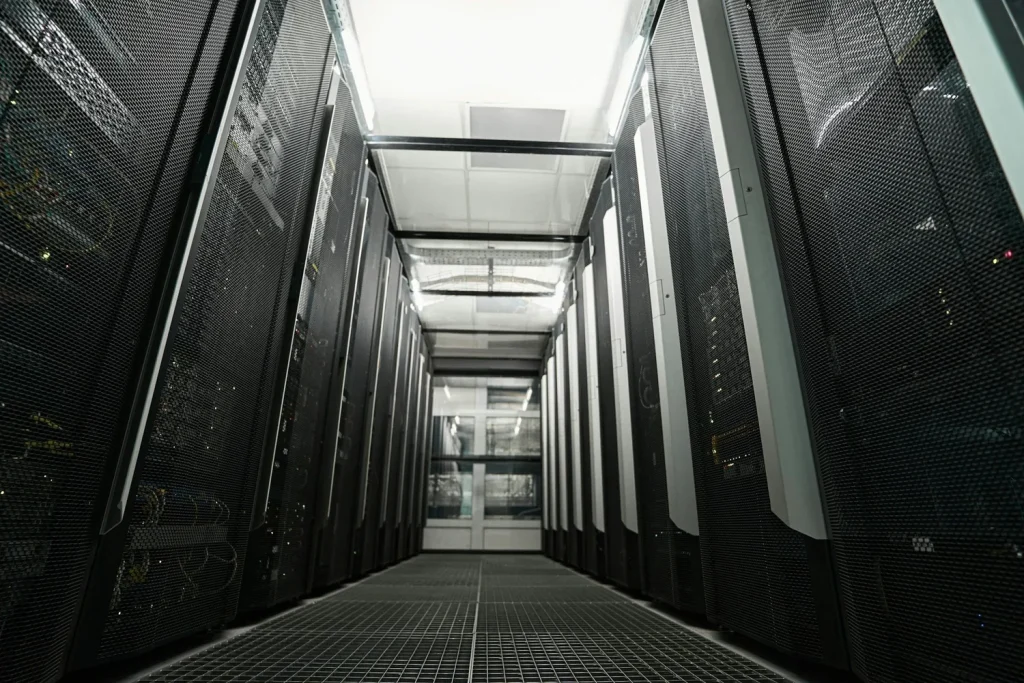
What is data center site selection?
Data center site selection is the process of matching a facility’s computing, infrastructure, reliability and growth requirements with a location that can support them. It connects market screening, utility and network validation, property diligence, cost analysis and delivery planning.
Power
Required service, infrastructure work, reliability arrangements and delivery dates.
Cooling and water
Equipment needs, heat rejection, climate conditions and the water balance.
Connectivity
Usable carriers, physical routes, service performance and deployment timing.
Property and approvals
Buildable land, physical conditions, access, environmental work and permissions.
Economics
Capital, recurring costs, contractual obligations and downside exposure.
Growth and resilience
Later phases, shared dependencies, recovery options and operating continuity.
Essential requirements should act as gates. An attractive total score cannot compensate for a site that cannot support a mandatory service or operating condition.
Define the operating model before selecting a market
Project labels are a starting point, not a complete specification. Facilities within the same category can have different workloads, customer commitments and recovery requirements. Translate those needs into measurable location criteria.
| Project model | Questions for the operating brief | Evidence to seek early |
|---|---|---|
| AI or high-performance computing | What rack densities, equipment cooling conditions and network architecture must the design accommodate? | Equipment requirements, thermal design basis, power profile and phased capacity plan. |
| Colocation | Which customers, carriers and service commitments must the location support? | Customer geography, network service options, physical route information and commercial delivery terms. |
| Enterprise | Which business systems must remain available, and how will recovery work? | Continuity requirements, security needs, connectivity to other operations and tested recovery dependencies. |
| Edge or latency-sensitive services | Which users or endpoints must be served within the required performance limits? | Defined latency targets, realistic network paths, service testing and local support arrangements. |
Specify the initial deployment, utilization assumptions, peak loads, service dates and later phases. Include staffing, maintenance support, security, construction access and the decision-makers who can approve a change to the requirements.
For the workload-specific questions, continue with AI and data center location planning.
Separate IT energy from total facility energy
Computing equipment is only part of the facility’s electricity use. Cooling, power conversion and distribution, and supporting systems also consume energy. Define the measurement boundary and time period before comparing efficiency assumptions.
DOE describes power usage effectiveness, or PUE, as total facility energy divided by IT equipment energy over the same period. Its data center cooling and efficiency guidance explains the annual energy basis.
Hypothetical annual example: assume 48,000 MWh of IT energy and an annual PUE of 1.25. The calculation gives 60,000 MWh of total facility energy, including 12,000 MWh of non-IT overhead.
48,000
MWh of IT energy
The assumed annual energy used by the IT equipment.
12,000
MWh of overhead
Total facility energy minus IT energy; this includes more than cooling.
60,000
MWh in total
48,000 MWh × 1.25 for the same annual boundary.
These invented figures illustrate energy accounting. The PUE assumption is not a benchmark or a promised result. Annual MWh and annual PUE do not establish peak MW demand, required utility service capacity or redundancy. Qualified electrical design must address the actual load profile and operating conditions.
Validate power delivery with the responsible utility
Give the provider a phased demand profile, voltage and service requirements, target dates and reliability needs. Ask for the evidence behind capacity and timing claims rather than relying on a map or an informal availability statement.
Infrastructure nearby
Identify the relevant lines and facilities. Proximity starts a conversation; it does not establish usable service.
Capacity evaluated
Clarify the study scope, assumptions, competing requirements, upgrades and unresolved conditions.
Responsibilities agreed
Document which parties deliver and fund the work, required agreements and remaining approvals.
Service delivered
Track construction, equipment, testing and acceptance against the conditions needed for the facility’s operation.
Review the proposed reliability architecture with qualified engineers. Two connections may share upstream infrastructure; backup generation also brings fuel, maintenance, environmental and operating considerations.
Use the data center power-capacity evaluation and power availability guide to examine the detailed evidence and schedule dependencies.
Evaluate cooling, water and climate as one system
Start with the IT equipment’s thermal requirements and the proposed design. Review performance under local conditions, seasonal extremes and the planned load—not only an annual average.
Inside the data hall
Define air and liquid cooling requirements, distribution systems, operating conditions and maintainability.
Outside heat rejection
Establish how heat reaches the environment and what energy, water, space and equipment the system needs.
Water and discharge
Check supply, pressure, quality, treatment, makeup demand, discharge requirements and drought-related constraints.
A closed liquid loop at the servers does not make the whole facility water-free. Heat may still be rejected through equipment that consumes water. Confirm the complete design and water balance.
DOE’s energy-efficient data center design guide connects IT conditions with cooling and electrical systems. Our data center water availability guide examines the location implications in more detail.
Confirm fiber routes, service performance and deployment
Physical diversity
Ask providers to identify the relevant paths, entry points and shared infrastructure. Separate carrier names do not prove separate physical routes.
Review common conduits, bridges, utility corridors and building entries that could create a shared point of failure. Determine what route information can be documented and what remains unverified.
Operational performance
Define the latency, bandwidth, availability and recovery requirements for the actual workloads and endpoints.
Confirm service feasibility, construction scope, commercial terms, deployment dates and acceptance testing. Nearby fiber does not establish that the required service can be activated on time.
Coordinate network deployment with electrical and building work. Treat routes and performance as evidence to validate, and keep unresolved dependencies visible in the project schedule.
Test the physical site and approval path
Buildable and accessible
Review topography, soils, drainage, easements, equipment delivery, emergency access and room for supporting infrastructure.
Approvals for the actual design
Confirm land use, environmental work, stormwater, air emissions, water and wastewater requirements with the responsible authorities and advisers.
Exposure and recovery
Examine flooding, severe weather and other relevant hazards affecting the facility, staff access, fuel, utilities and network routes.
Use the FEMA Flood Map Service Center as an official starting point for flood information, then obtain site-specific review where needed. A parcel’s map designation alone does not establish that its infrastructure connections and access routes are protected.
Review staffing and specialist support as part of site viability: facilities technicians, electrical and mechanical service, security, emergency response and equipment maintenance must be reachable when required.
Compare sites using a common evidence table
Evaluate essential requirements first, then compare viable options. Record the source, date, assumptions and confidence behind each answer. The table below is a working structure to adapt to the project.
| Evaluation area | Evidence to compare | Remaining dependency | Decision question |
|---|---|---|---|
| Electrical service | Provider findings, phased demand, upgrade scope and service milestones. | Equipment, agreements, approvals and construction. | Can the required service support the planned operating date? |
| Cooling and water | Thermal design, climate analysis, water balance and provider input. | Final design, supply conditions, discharge and permits. | Can the design operate within local resource and approval limits? |
| Connectivity | Carrier feasibility, routes, endpoints and acceptance criteria. | Extensions, access agreements and service activation. | Can the required performance and route arrangements be delivered? |
| Property and approvals | Physical diligence, buildable layout and authority feedback. | Investigations, design changes and outstanding decisions. | What must be resolved before the next commitment? |
| Cost and delivery | Common-scope capital and operating estimates with schedule logic. | Unpriced work, lead times and contractual conditions. | Does the case remain viable under credible downside scenarios? |
| Future campus | Later-phase demand, land and infrastructure requirements. | Additional capacity, corridors, approvals and construction interfaces. | Can later halls be delivered without undermining live operations? |
Mark unknowns as unresolved and assign an owner and due date. A preliminary discussion, completed study, signed agreement and tested service represent different levels of evidence.
Use the data center shovel-ready assessment when translating marketing claims into project-specific readiness checks.
Compare total cost and the work behind the schedule
Before operations
Include land, building work, site preparation, electrical connections, substations, cooling, fiber extensions, approvals and commissioning.
Identify who pays for each item, what is included in the estimate and which design or provider decisions could change it.
During operations
Compare energy and demand charges, water, staffing, service contracts, maintenance, insurance, taxes and required replacement work.
Use the applicable service terms and realistic operating profiles. A simple electricity price per kWh does not capture every tariff or delivery condition.
Test the effects of a delayed utility milestone, a cooling-design change, lower initial utilization or additional infrastructure work. Distinguish one-time investment from recurring cost and avoid counting the same exposure twice.
Review incentives against actual eligibility, timing and obligations. An incentive should not conceal an unresolved infrastructure requirement. The cheap land and data center cost guide shows why acquisition price is only one part of the decision.
Plan the full campus before locking in Phase One
Map later halls and supporting systems while the first phase is still being evaluated. Space alone does not establish that utilities, cooling, network services or approvals can expand.
Phase the demand
Define later electrical loads, water needs and network requirements, including what remains subject to provider study or future investment.
Reserve the interfaces
Protect space and corridors for substations, heat rejection, ducts, access, security and equipment replacement.
Protect live operations
Plan how later construction, service changes and commissioning will occur beside operating data halls.
Confirm which later-phase rights or capacities are actually secured and which are assumptions. Revisit the plan if computing density, tenant demand, equipment or delivery dates change.
Continue with data center campus expansion planning for the longer-term site questions.
Move from requirements to a documented decision
1. Define and screen
Approve the operating brief, identify essential gates and screen markets against project-specific needs.
2. Validate and investigate
Obtain utility and carrier input, investigate the property and identify the approvals and work still required.
3. Compare and commit
Review consistent cost and schedule cases, unresolved risks, conditions and the evidence needed for approval.
4. Deliver and verify
Assign owners, track dependencies and confirm infrastructure and facility acceptance before relying on them.
Keep an evidence register, responsibility list and integrated delivery schedule. The commitment decision should state what is known, what remains conditional and who is accountable for closing the gaps.
For the wider context, read how data center site selection is changing. This overview provides the evaluation framework; that guide explores how infrastructure and growth pressures affect the search.
Data center site selection FAQs
What should companies evaluate in data center site selection?
Start with the operating model, then evaluate power, cooling, water, connectivity, physical conditions, approvals, cost, delivery timing and expansion. Essential requirements should be verified before a site’s comparative advantages determine the final choice.
Why is power availability different from power delivery?
Capacity discussions may still depend on studies, upgrades, agreements, equipment and construction. The relevant question is whether the required service can be delivered and accepted under the conditions and schedule the project needs.
Can annual PUE be used to size the electrical connection?
Annual PUE is an energy ratio. Together with annual IT energy it can illustrate total annual facility energy, but it does not establish peak demand or the required service architecture. Those need a project-specific electrical design and load analysis.
Does liquid cooling eliminate data center water demand?
Not necessarily. A recirculating loop at the equipment may transfer heat to another system that uses water. Evaluate the full heat-rejection design, makeup needs, treatment and discharge rather than relying on the label “liquid-cooled.”
Do two fiber carriers provide physically diverse routes?
Not automatically. Different services may share conduits, entry points or upstream infrastructure. Confirm the physical paths and relevant shared dependencies, alongside performance requirements and the date the service can be activated.
What makes a data center site shovel-ready?
Readiness depends on the actual project. Establish which property, utility, network, approval and construction conditions are satisfied and which still need work. A marketed designation does not by itself prove that the planned facility can operate on time.
How should companies compare data center locations?
Apply the same operating requirements, evidence standards, scope and time horizon to each candidate. Separate essential gates from preferences, document unknowns, compare total cost and test how important assumptions affect the delivery and operating case.
How can WorldPoint help with data center location decisions?
WorldPoint coordinates location strategy and advisory work across infrastructure information, economic development discussions, incentives and implementation considerations. Qualified engineering, environmental, legal and other specialists remain responsible for their respective technical and professional work.
Connect your technical brief to a practical location strategy
WorldPoint Site Selection helps teams organize infrastructure questions, location comparisons and delivery responsibilities before committing to a site. Bring your initial requirements, target dates and campus plans to the discussion.
WorldPoint provides site selection and advisory coordination. Engineering, environmental, legal and other specialist work should be performed by appropriately qualified parties. Real estate brokerage activities are handled separately through CBREG True Team.