
ADVANCED MANUFACTURING · LOCATION STRATEGY
How Automation and Labor Shape Manufacturing Site Selection
Design the operating model first. Choose a location where the people, power, and support network can make it work.
By Hunter Drinkall · Published September 10, 2026
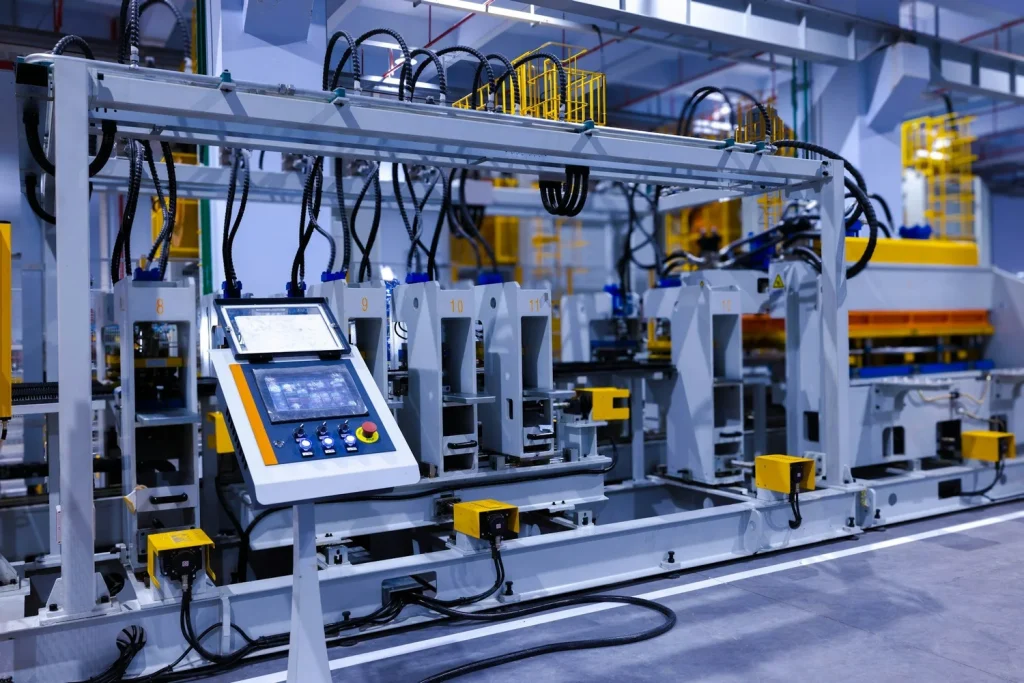
Manufacturing equipment photo: Homa Appliances / Unsplash. Illustrative industry image.
Automation changes the location brief.
Automation and labor shape manufacturing site selection together. A facility with fewer production operators may still need scarce controls specialists, maintenance technicians, engineers, and equipment support. The location must support that combination from commissioning through steady production. Use our AI and automation workforce strategy guide to translate the operating model into roles and coverage.
People
Which roles keep the process running—and who covers every shift?
Infrastructure
Can the site deliver the required power, utilities, and connectivity on time?
Support
Can qualified vendors, trainers, and spare-parts providers respond when needed?
The right question is whether the proposed operation can perform reliably in each location. Start with manufacturing location analysis that translates the production plan into measurable requirements.
Compare three operating models.
These are planning scenarios, not a ranking from least to most advanced. Product mix, quality requirements, changeovers, demand, and capital availability determine which approach fits.
Automation from launch
Install the intended automated production system at the start. Validate integration, commissioning, specialist hiring, and service support before relying on the projected output.
Labor-led, then automate
Begin with more manual work and introduce automation in phases. Test whether the region can support the initial hiring need and the later transition in skills.
Hybrid production
Combine automated processes with operator-led tasks. Define the interfaces, changeover responsibilities, and training needed to keep people and equipment working together.
A location may fit one model and struggle with another. Compare each model against the same product requirements, output target, and evaluation period before choosing a preferred region.
Headcount is only the beginning of workforce analysis.
Build a role-by-role staffing plan rather than assuming that a large manufacturing workforce can support your equipment. Separate roles that must arrive experienced from those that can develop through training.
Keep equipment running
Controls, electrical, mechanical, and automation specialists diagnose faults, maintain equipment, and manage changes. Define coverage for nights, weekends, and absences.
Keep output within specification
Operators, quality technicians, process engineers, and supervisors manage production, inspections, and exceptions. Automated inspection still needs clear ownership.
Improve the operation
Engineering and continuous-improvement roles support new products, process changes, and future capacity. Their workload should be visible in the long-term staffing model.
Use workforce analysis to examine skills, compensation, competition, and hiring lead times. The talent-hub comparison guide helps distinguish regional employment depth from a credible recruiting opportunity.
Confirm relevant equipment experience and transferable skills with technical leaders. Occupational titles alone do not prove that a candidate can support a particular control system or production process.
Turn the automation plan into site requirements.
| Operating requirement | Location evidence | Decision risk |
|---|---|---|
| Specialist coverage | Relevant skills, shift coverage plan, hiring lead times, and retention conditions. | A small number of hard-to-replace employees become single points of failure. |
| Electrical service | Provider-confirmed capacity, service date, and equipment-specific power-quality needs. | Building completion is mistaken for production readiness. |
| Process utilities | Water, wastewater, cooling, air, or other requirements validated for the process. | Available land is shortlisted without a feasible utility plan. |
| Equipment support | Qualified providers, response commitments, parts access, and escalation routes. | A nearby vendor is assumed to support your exact equipment. |
| Training | Instructors, equipment, available seats, qualification requirements, and delivery dates. | A program exists on paper but cannot support the launch. |
| Material movement | Inbound supply, internal flow, storage, and outbound capacity matched to output. | A faster production line moves the bottleneck elsewhere. |
Treat critical service dates and minimum capabilities as pass/fail gates. Use weighted comparisons for preferences only after those gates are met. The manufacturing site readiness assessment provides a broader check before commitment.
Stress-test a production stop before choosing a site.
Consider this hypothetical scenario: a controls fault stops a critical line during an evening shift. The equipment is identical in two candidate locations, but the response system may be very different.
01 · Diagnose
Who can assess the fault on that shift? Confirm on-site capability and an agreed escalation path rather than assuming remote help will always resolve it.
02 · Restore
If specialist support or a replacement component is needed, what can the provider actually commit to? Check travel, parts access, and service coverage.
03 · Restart
Who verifies the repair, authorizes restart, and confirms product quality? Include the time and personnel needed to return to stable production.
Record the recovery assumptions for each finalist and identify what must be funded to close a gap: additional training, spare parts, service arrangements, or stronger shift coverage. This is an illustrative planning exercise, not a reported client incident.
Connect the findings to supply chain risk assessment so equipment support is evaluated alongside other operational dependencies.
Compare total operating cost—not just wages.
Automation can change both capital needs and recurring costs. A lower operator count does not, by itself, establish a lower total cost or faster payback. Build the location comparison around the same saleable output and quality requirements.
| Cost or assumption | Include in the comparison |
|---|---|
| Capital & integration | Equipment, installation, commissioning, integration, and phased upgrades. |
| Workforce | All operating and support roles, benefits, shift premiums, training, and realistic hiring costs. |
| Reliability | Maintenance, service coverage, spares, and clearly stated downtime assumptions. |
| Utilities & logistics | Process energy and utility needs, material handling, freight, and storage. |
| Ramp-up | Training, qualification, early production constraints, and temporary support. |
| Future change | Product changeovers, capacity additions, equipment modification, and workforce development. |
Test a slower ramp-up, delayed specialist hiring, and lower equipment availability. Explain which assumptions alter the preferred location. Avoid counting the same production loss twice in both downtime and output assumptions.
The manufacturing cost analysis and location scorecard should tell the same operating story.
Build the support network before commissioning.
Training with capacity
Confirm which skills partners can teach, when employees can complete training, and how qualification will be assessed. Include time from your experienced staff.
A workable hiring catchment
Assess realistic shift commutes, housing, and relocation needs for key employees. A regional labor pool is useful only if the site can attract and retain people.
Vendors with defined scope
Verify equipment familiarity, coverage hours, escalation, spare-parts responsibilities, and response commitments. Separate sales presence from service capability.
Use apprenticeships and recruiting for different needs: development can build a durable pipeline, while launch-critical roles may require experienced hires. Tie both to a single staffing schedule.
Map the hiring and qualification dates onto the manufacturing expansion timeline so recruitment, equipment delivery, utility readiness, and training converge before startup.
Check incentive assumptions against the automation roadmap.
The original operating plan and the later automation plan may involve different employment levels, wage profiles, investment phases, and training needs. Bring both into incentive discussions early.
- Show the staffing plan by phase rather than using a single headline jobs number.
- Ask which commitments, measurement dates, and reporting requirements apply to the proposed package.
- Model the project with realistic benefit timing and confirm how changes to the project would be addressed.
- Have the relevant agreement terms reviewed before commitment; outcomes depend on the program and agreement.
WorldPoint’s incentives advisory helps connect discussions with the operating plan. Treat training support, infrastructure coordination, and financial incentives as parts of the location evaluation—not substitutes for a feasible project.
Use one coordinated decision process.
Define
Document products, processes, shifts, automation phases, workforce, utility needs, and output targets.
Validate
Compare regions consistently, then confirm site-specific requirements with providers and qualified partners.
Commit with conditions
Record unresolved gaps, owners, required dates, mitigation costs, and the evidence needed before proceeding.
WorldPoint combines site selection advisory with expansion planning to keep workforce, infrastructure, logistics, and implementation assumptions aligned. Licensed brokerage activities are handled separately through CBREG True Team where appropriate.
The deliverable should be a clear comparison of location and operating-model combinations, with transparent trade-offs and a practical path to launch.
Automation, labor, and site selection FAQs
Does automation make workforce availability less important?
It can reduce some production tasks while increasing the importance of specific technical roles. Evaluate the full staffing mix, shift coverage, training, and support needed to operate the proposed system.
Which workers does an automated manufacturing plant need?
Requirements vary, but may include operators, maintenance technicians, controls specialists, quality staff, engineers, and production leaders. Define the roles from the process and equipment rather than applying a generic staffing ratio.
Should a company choose its automation strategy before selecting a site?
Develop a sufficiently clear operating model before regional screening. Where the strategy is still evolving, compare defined scenarios and identify which location requirements change between them.
What infrastructure matters for automated production?
Assess equipment-specific electrical service, power quality, process utilities, connectivity, material handling, and expansion capacity. Confirm requirements and timing with qualified providers rather than assuming advertised capacity is immediately usable.
Can a smaller labor market support a highly automated plant?
Potentially, if it offers the required skills, realistic recruiting conditions, training, and dependable equipment support. A smaller headcount does not remove the need to validate scarce roles and coverage.
How should manufacturers compare phased and upfront automation?
Use consistent output, quality, and evaluation assumptions. Compare capital, workforce, training, reliability, utilities, logistics, ramp-up, and future modifications, then stress-test the assumptions that could change the decision.
How can automation affect incentive planning?
It may change employment, wage, capital, and training assumptions over time. Compare the phased operating plan with the applicable commitments and timing, and clarify how project changes would be handled before signing.
When should vendors and training partners be involved?
During evaluation of the shortlisted locations, early enough to verify capability, capacity, responsibilities, and delivery dates. Waiting until equipment arrives can leave important staffing or support gaps unresolved.
Research behind the planning framework
NIST MEP’s robotics and manufacturing automation overview describes application-dependent opportunities for productivity, quality, and shifting human work toward other tasks. Those benefits need to be tested against the specific operation.
NIST’s Manufacturing USA occupation and competency analysis links advanced manufacturing technologies with workforce knowledge, skills, and abilities. It supports defining the skills required rather than relying only on employment totals.
The location matrices and hypothetical downtime exercise above are WorldPoint planning guidance. They do not predict savings, staffing ratios, or production performance for a particular facility.
Choose a location that supports the way you plan to operate.
Bring your automation roadmap, critical roles, production targets, and timeline. WorldPoint can help translate them into a practical U.S. site selection strategy.