
Executive field guide / U.S. location strategy
What Companies Should Evaluate Before Choosing a U.S. Manufacturing Location
Evaluate the operating model behind the address. These seven manufacturing site selection criteria connect the property, people, infrastructure and delivery plan.
What should companies evaluate before choosing a manufacturing location?
Compare production and property fit, workforce depth, utility readiness, suppliers and freight, total cost and incentives, launch feasibility, and long-term growth capacity. Test the essential requirements first, then weigh the tradeoffs among locations that can support the intended operation.
An available building, an attractive wage estimate or an incentive offer can start a conversation. The decision needs a shared view of how the plant will hire, receive materials, use utilities, produce, ship and expand. Apply consistent assumptions through the location comparison process.
The evaluation framework
Seven manufacturing site selection criteria to evaluate
Use these criteria as a coordinated review, with input from operations, engineering, HR, supply chain, finance and leadership. The order below is a reading sequence; project priorities and weighting should follow your own operating requirements.
Production requirements and property fit
Start with a written operating brief. Define the products, processes, equipment, output, shifts and future phases the facility must support. Acreage and building area matter alongside clear height, floor loading, loading docks, truck circulation, production flow and space for the next investment.
Specialized operations may also need clean production areas, security controls or particular material-handling arrangements. Test the property against those needs with the appropriate technical team before treating an attractive building as a workable plant.
Evidence to request
A project requirements brief, equipment and layout assumptions, property information and a documented gap list.
Questions to resolve
- Can the equipment, people and materials move through the proposed layout?
- Which requirements are essential at launch, and which belong to later phases?
Decision test
Does the property support the intended operation?
Workforce depth and the ability to retain people
Evaluate the occupations the plant will need, including production, maintenance, controls, engineering, quality, logistics and management. Examine relevant skills, competing employers, compensation, shifts, commuting patterns and the pace of planned hiring.
Check training capacity with local colleges, technical schools and workforce partners. Apprenticeships can develop capability over time, while experienced recruiting may be necessary for launch-critical roles. Include housing and relocation assumptions for transferred employees and leaders.
Evidence to request
Role-level labor and wage analysis, employer and partner discussions, hiring milestones and training capacity.
Questions to resolve
- Can the market support the required roles and start dates?
- What could make hiring or retention harder as another shift is added?
Decision test
Can the location staff and sustain the operation?
Utilities: capacity, quality and delivery timing
Verify electrical service, gas, water, wastewater and telecommunications at the specific site. Regional capacity or a nearby utility line is a starting point for discussion; the project needs confirmation of available service, required upgrades, costs and delivery responsibilities.
Match utility assumptions to the production process and expansion phases. Power quality, service configuration, treatment requirements and backup arrangements may matter as much as headline capacity. A building-ready date and a utility-ready date can be different milestones.
Evidence to request
Utility correspondence, technical studies, service scope, cost responsibilities and an accountable delivery schedule.
Questions to resolve
- What service is available now, and what must be built or upgraded?
- Does the supported delivery schedule fit commissioning and production?
Decision test
Will the required services be ready when needed?
Suppliers, freight and access to customer markets
Map inbound materials and outbound products before ranking transportation access. Compare the relevant highway corridors, rail, ports, intermodal options, airports, carriers and distribution resources against actual shipment patterns and customer commitments.
Then test alternatives. A short route may still create exposure if it depends on one corridor, border crossing, carrier or critical supplier. Evaluate sourcing options, qualification needs, inventory implications and the effects of disruption on production and service.
Build a supply chain location strategy · Test continuity risks
Evidence to request
A shipment and supplier map, carrier input, route and cost assumptions, and documented alternatives.
Questions to resolve
- How does each location change inbound and outbound movement?
- Which alternative remains usable when the normal route or source is disrupted?
Decision test
Can the network support reliable supply and delivery?
Total operating cost and usable incentive value
Use the same project assumptions and time horizon for every location. Compare capital and launch costs alongside labor, utilities, freight, property costs, required improvements and ongoing operating arrangements. Include the cost of making a site workable.
Evaluate incentive benefits against their conditions and timing. Review eligibility, investment and hiring commitments, reporting duties, payment or credit timing, and any repayment provisions with the appropriate advisers. An announced package is not the same as a usable project benefit.
Compare manufacturing operating costs · Review incentives advisory services
Evidence to request
A consistent cost model, documented assumptions, current program terms and a schedule of obligations and benefits.
Questions to resolve
- Which costs change materially between locations?
- Which incentive benefits can the project realistically qualify for and use?
Decision test
Do the economics hold under realistic assumptions?
Site readiness and time to production
Build one delivery schedule that connects property due diligence, design, relevant approvals, construction, utility work, equipment installation, hiring, commissioning and production startup. Confirm the sequence with the parties responsible for delivering it.
Review property constraints such as access, environmental and geotechnical conditions, zoning, drainage and other project-specific requirements with qualified specialists and the relevant authorities. A general site designation does not establish that every manufacturing use is ready to proceed.
Assess manufacturing site readiness · Plan the expansion timeline
Evidence to request
Site studies, approval and permitting discussions, a dependency-based schedule and a named action owner for every gap.
Questions to resolve
- Which unresolved item controls the earliest credible production date?
- Who owns each approval, study, upgrade and delivery commitment?
Decision test
Can the project reach production on a supported schedule?
Expansion capacity and the local support needed to grow
Test the next phase while evaluating the first. Additional land is useful only if access, utilities, workforce, production flow and local conditions can support the intended expansion. Clarify how future growth fits the wider manufacturing network.
Identify the local partners and practical support the company will need, including economic development coordination, vendor introductions, employee housing and relocation. International manufacturers should connect those arrangements to their U.S. entry plan and confirm applicable requirements with local advisers.
Review manufacturing footprint strategy · Plan international U.S. expansion
Evidence to request
A phased operating plan, expansion assumptions, partner responsibilities and housing or relocation requirements.
Questions to resolve
- Can the location accommodate the expected next production phase?
- Which local relationships and support arrangements are needed before launch?
Decision test
Will the location support the business beyond opening day?
Move from analysis to a defensible shortlist
Three questions before a location advances
Keep essential requirements separate from preferences. A weighted comparison is useful after the team establishes whether an option can meet the project’s critical needs.
OPERATING FIT
Can it run?
Confirm process, property, workforce, utilities and supply-chain requirements. Resolve any essential operating constraint before relying on a total score.
BUSINESS FIT
Can it compete?
Compare complete costs, service implications, risks and realistically usable incentives on a common basis. Explain the tradeoffs that change the business case.
DELIVERY FIT
Can it be delivered?
Validate approvals, improvements, hiring and commissioning milestones. Identify who is responsible for each commitment and what evidence supports the dates.
Use the manufacturing location scorecard to organize evidence and weighting. Carry unresolved conditions in the decision record so a strong aggregate score does not obscure a critical gap.
An illustrative planning example
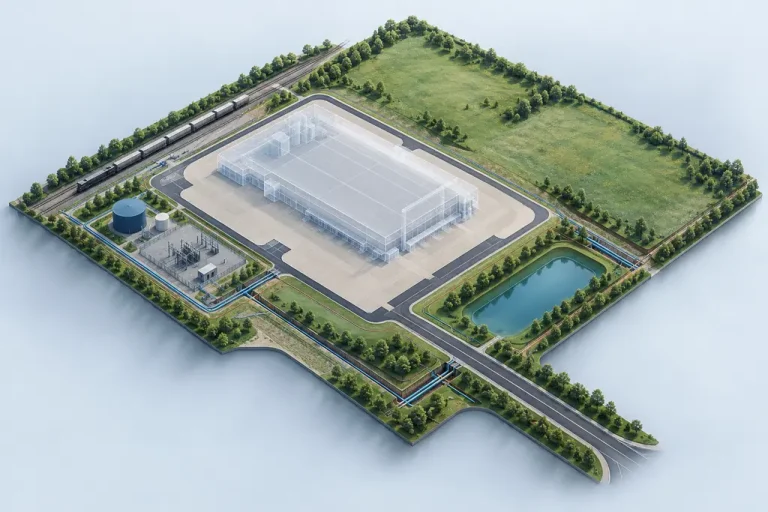
A building can be available before the operation is ready.
What the initial offer shows
- An available building that appears to fit the equipment.
- A utility improvement described as planned.
- An incentive opportunity tied to the proposed investment.
What the team still needs to establish
The utility work may control commissioning. The hiring plan may depend on skills that are difficult to reach locally. Incentive timing may not match the launch budget.
Decision: verify the service milestone, workforce assumptions and program conditions. Then revise the delivery plan or compare other options before making the location commitment.
This is a hypothetical example, not a rating of any real property or market.
For the location’s performance under disruption, connect the evaluation to manufacturing continuity planning. For project delivery, keep the actions aligned with the manufacturing expansion checklist.
Before the final commitment
A manufacturing location evaluation checklist
The final discussion should bring the evidence together in one decision record. Confirm these six elements before a preferred location becomes a binding operating plan.
For international manufacturers, add the domestic workforce and supplier setup, local partner responsibilities, housing and relocation needs, and applicable state and local requirements to the broader U.S. entry plan. The U.S. site selection planning checklist can help coordinate those workstreams.
Useful public inputs for workforce research
BLS Occupational Employment and Wage Statistics provides occupation-level employment and wage estimates for multiple geographies. Keep the occupations, geography and reference period consistent when comparing markets.
Census OnTheMap shows where people work and where workers live. These tools support an initial market review; they do not establish how many qualified people will accept your specific jobs or commute to the proposed plant.
Questions before the location decision
U.S. manufacturing location FAQs
What are the most important manufacturing site selection criteria?
The most important criteria are the ones required by the production process: suitable property, relevant workforce, adequate utilities, workable supply and freight networks, realistic economics and an achievable launch schedule. Future growth and local support also matter. Define the essential requirements before weighting preferences.
Should incentives determine the manufacturing location?
Incentives should be evaluated within the full operating case. Compare usable benefits, timing and obligations alongside workforce, utilities, logistics, property and delivery requirements. Review current program terms with the appropriate advisers before relying on an announced package.
How should companies compare workforce between locations?
Compare the occupations, skills, wages, shifts and hiring milestones the facility actually needs. Examine competing employers, practical commuting patterns, training capacity, housing and relocation assumptions. Regional population or a single average wage does not establish that the plant can hire and retain the required people.
What utility information should be verified before selecting a site?
Confirm available service, required capacity and quality, project-specific technical needs, upgrades, costs, responsibilities and delivery timing. Test both launch and future phases with the utility and relevant specialists. Record what is supported and what remains conditional.
What is the difference between an available property and a ready manufacturing site?
An available property can be considered for acquisition or occupancy. Readiness depends on whether the proposed operation can use it, including property conditions, relevant approvals, utilities, access, improvements and the delivery schedule. The assessment must reflect the actual manufacturing project.
How can international manufacturers evaluate U.S. location options?
Use the same operating framework while coordinating U.S. workforce and supplier development, utility and infrastructure commitments, local advisers, housing, relocation and economic development relationships. Connect the location review to the company’s broader U.S. entry plan.
What should a location recommendation include?
Include the operating requirements, comparable candidate evidence, cost and schedule assumptions, reasons for the preferred option, remaining conditions and responsible owners. Leadership should understand what has been verified and what must still happen before the operation can launch.
Take the next step in the evaluation
Start with the operation your location needs to support.
WorldPoint Site Selection helps manufacturing leaders evaluate workforce, infrastructure, utilities, logistics, incentives and long-term operating requirements together. We coordinate the location analysis with local partners, housing and relocation considerations, vendor introductions and the expansion plan.
Real estate brokerage services, when needed, are handled separately through CBREG True Team.